


♪
Trenton ReynoldsIt is Friday, October 7th, 2016. This is Room in the Trees, a podcast about Making art, life, creativity, getting out there, getting it done, about all those things. This is episode number 23, the worst painting you can possibly make. Room in the Trees is hosted by Sabrina Harrison and me, Trent Reynolds. Show notes including pictures, links, video, and more for every episode. can be found at roominthetrees.com if you are enjoying the podcast please take a moment to rate us on itunes which you can get to by going to roominthetrees.com backslash iTunes. And if you would like to show your monetary support, you can become our patron at patreon.com backslash room. I have a couple shout-outs, a couple new Patreon subscribers, a thank you, big, warm, heartfelt, gooey thank you, To Melanie Price and Kate Oberreich.
Oberreich?
Trenton ReynoldsWhatever it may be. Thank you to Kate and Melanie. You guys are awesome. We really appreciate all your support. you and now with Sabrina's permission I'm going to take a minute and just give you a small update about what's happening here at Babylon Studio I'm coming up on five months in the new studio space and my lease is over in next month November November 8th is the last day of my current lease. I have not been able to make it financially worthwhile to be here renting the space. There have been some wonderful successes, and I've learned a tremendous amount, but so far I've not been able to make it financially feasible. to stay here. So I wanted to put this out into the universe and put it out to you podcast listeners. If there is anyone in the LA area, Santa Monica area, that is interested in talking about some ideas or interested in possibly using the space for... a workshop of your own, or for creating art, please contact me. Any ideas that you have, I would be willing to entertain. I would love to be able to keep this space and continue building a community here. You can contact me through the website at roominthetrees.com, or you can contact me directly or leave me your contact information by emailing dabblon, D-A-B-B-L-E-O-N, at gmail.com. Thanks very much. And here is the episode. It's Monday! Yay! I'm excited about this topic. For about five minutes, I could not think of any assignment whatsoever. But then I was struck with inspiration.
Sabrina Ward HarrisonWhat we're talking about today... some of our favorite assignments.
- Yes. - Yeah.
Trenton Reynolds- So when you thought of this, what did you have in mind specifically? Are you thinking like assignments from high school or just kind of in general?
Sabrina Ward Harrison- I'm actually thinking of assignments from college when I was at art school.
Trenton ReynoldsOh, okay. Well, good, because I wasn't thinking from high school either, but since that's kind of where our origin story starts, I didn't know if that's what you had in mind.
Sabrina Ward HarrisonI don't remember anything in high school, except, I don't remember. I didn't either. Oh my God, I feel like I have to share for the podcast my fail from last week's turning my book proposal just to follow up.
Trenton Reynolds- Oh yes, that's a great story.
Sabrina Ward Harrison- It was such a fail. So last Monday I turned in my proposal, my pages and so on. And over the weekend, I think it was, maybe it was Friday. So four or five days had gone by. I was kind of rereading through the proposal. And one part, I talk about room in the trees and how I started this with my old friend from high school. Well, I had read it and it said in 2016, my only friend, my only friend, my only friend Trent and I started the Room in the Trees podcast. So I said only instead of old. It makes such a difference. I'm just picturing someone who knows nothing about Room in the Trees starting to read that like.
Trenton ReynoldsI'll bet you anything that it was just like an autocorrect thing.
Sabrina Ward HarrisonIt was totally an autocorrect thing. It was totally an autocorrect thing. I had...
Trenton ReynoldsOh. That's when you wonder if somebody doesn't have a sense of humor that's in charge of this autocorrect thing, because that is just... I don't know. How do things like that happen? Like, that feels too intentional.
Sabrina Ward HarrisonIt's just, it's funny when one word changes the whole context, because then it sounds like this really lonely podcast about, like, with my one friend in my life, we just started this very sad conversation about...
Trenton ReynoldsAnd this is what you submitted to your editor.
Sabrina Ward HarrisonYeah, yeah. So it was funny because I did call and I couldn't stop laughing. I was like, I just need to share an epic fail in regards to what I sent. And they started laughing. So yeah. So I carefully reread it today, but I'm sending it back in. so we're talking about some of our favorite assignments some of them really stand out in my mind from college do you want to start one off, Trin?
Trenton Reynoldssure my what I'd like to share requires a little bit of context, if you don't mind so when you first told me you texted me this idea I was really struggling to even remember any assignments, but then I remembered one of my favorite all-time classes and the teacher of that class, and I'd like to share three of the assignments that he gave in that class. And this is from grad school at the School of the Art Institute, Institute of Chicago. And the teacher was Galen Gerber. Great name. Great. Fantastic. Yep. Solid name. Solid name.
Sabrina Ward HarrisonGive a little background. So was this your first year there? Give a little context of like, were you nervous? Was it, what class was it?
Trenton ReynoldsSo the deal with the class is this, and it was, I can't even remember what the class was listed at. I think it was just called like art practices or something like that. Uh-huh. And something really ambiguous, but I just had heard so much good about Galen Gerber. I was told that I just need to take a class from him no matter what, and what it ended up being is just a group of maybe 10 of us that would get together once a week for this class, and I think it was... was two or two or three hours long and the whole class was just going around in a circle talking about what we had done that week and then he would kind of mediate this discussion between us and then give us assignments of what we're supposed to do for the following week so meaning individual assignments individual assignments and so kind of what it ended up being more like is a group therapy session, and he would give these really strange but pointed and wonderful assignments. So that's what I'm going to talk about today. And really, this is just me telling you how much I love and revere Galen Gerber and how much he has affected my own perception of what teaching is. art is and can be. I would love at the end of my life for somebody to compare me to Galen Gerber. Just have a lot of love and respect for him. Anyway, so I'm excited to just share some memories of Galen Gerber.
Great.
Trenton ReynoldsSo there was this girl in the class that had a lot of anxiety. And she was embarrassed to show the projects that she had been working on. And they ended up to be really, you know, these kind of cool animations. But you could tell she just had this insecurity about what she had done. And even the fact that she was there at school, I think she was an undergrad at the School of the Art Institute of Chicago. Turns out her father is a big time entertainer. and she felt like she was kind of in his shadow and could never kind of match up and he wasn't a very warm father to her or something like that. It's been long enough that I can't remember the exact details but she had all this anxiety surrounding her identity as an artist. So Galen Gerber gave her the assignment that she had to tell three people that she didn't know that she was an artist. and that was it.
Oh, I love that.
Trenton ReynoldsAnd I loved it and it was so perfect for her and part of the, part of the difficulty of communicating what I'm, you know, these assignments is just understanding the personality of the person he was giving this assignment to. It was so perfect for this girl. I mean, she was so anxious
about,
Trenton Reynoldsabout, her identity and you could tell that when you gave that assignment, it was like way out of her comfort zone and she did not want to do that. And so she did it, right? So what happened? She did it. And the next week she came in all smiles, like excited to tell us about her experience telling three different people that she didn't know. that she was an artist. And it was wonderful. You could tell that it made a big difference in her psyche of just owning that title and enrolling other people, enlisting other people and believing that about her as well. you know, like, I don't know. I think getting it out of her head and out of her heart and out of this kind of anxious cloud and putting it into the world and telling somebody in a way that they would believe you, you know, that, act is a very potent all of a sudden it's not just you it's somebody else in the world it's not in three other people in the world now that know that you're an artist and you're owning that so it was awesome it was just perfect for this person and so good for the rest of the class to think of that same thing and how we relate to this time this owning our
Sabrina Ward Harrisonour identity. So what do you got? I remember one of my favorites was in, I went to CCAC, now it's called CCA, California College of the Arts in the Bay Area. And it was my freshman year and it was, I think it was a 3D, 3D kind of elective class or a prime, a foundation class.
Um,
Sabrina Ward HarrisonAnd I'm not remembering my teacher's name, but I can totally picture her. Shoot, I can't remember her name. But what we had to do was create a three-dimensional autobiographical book. and the limitations were it could be as small as something you wear around your neck or as big as something you walk through and i love that i love that extra part about like to just open kind of way open your mind to the possibilities um I, it made you think about all, just like how do you, how, what shape, what form, what way do you tell your story of your life? What, um, is it moving? Is it how, in what way is it tactical?
Um...
Sabrina Ward Harrisonyou know, what kind of object is it? What kind of scale is it? How accessible is it? It just was fantastic. I ended up creating these, you know, as kids, you'd have like building blocks where you turn them all one way and then makes a picture and then you turn them all another way and it makes another picture.
Like...
Sabrina Ward Harrisonlike an elephant or a, you know, dinosaur or something, you know? You know what I'm talking about, those, like, square blocks? Yeah. Okay. So I did that, and I had each one be a different theme, and then one of them be... It was back in the day of letter press where you rub down type. And I did it so I cut down piece four by four inch squared blocks. And I just... It's hard to describe how it all worked. But I loved that project. I loved... It was one of the first projects that I felt really... challenged me in an exciting way to think about my life in that context of telling my story. The next year I started making Spilling Open, so it was that, the notes and that journal that I did all the drawings and you know, that process of investigating my story was probably a very link to that project and
Trenton Reynoldsspilling open too do you feel like that project has informed some of the assignments or projects that you've created in your workshops
Sabrina Ward Harrisoni was gonna say i've loved giving that assignment i've probably done it twice um usually if it's a multi-week workshop. I'd love to do it again when I start teaching online. But it's nice to do over a series of weeks. It's really wonderful.
Trenton ReynoldsI think with all of these projects, probably the ones that we feel most intensely about. It's not, like somehow they are, they create a way for you to see, like open you up to new potential. And I think that's such a fine line, hard thing to do because you wanna give enough instruction and like steps and you wanna give this project enough definition for your students to know what they're doing, but you don't want to give too much definition and wrap it up too tightly, or it just becomes about one isolated thing instead of opening your mind up to how this relates to the larger world. I don't know. I've always found that a really fascinating balance to strike.
Sabrina Ward HarrisonI just like, what I love and I miss about art school was the conversations, you know, the feeling of talking through a project, like talking through your ideas for how you're going to kind of tackle that, the assignment. That's what I love about assignments. It's not something where you're given it and you go off in a closed room and you just have to figure it out. and you have to come up with something. It's the dialogue of, huh, that, and then someone else says, well, that makes me think of this, and then asks you a question further.
Yeah.
Trenton ReynoldsI think I'm right on board with that, and that's what I love so much about this class that I'm telling you about is the dialogue, is that when he gave these assignments to other people, it was a dialogue. this opportunity to ask those questions and envision myself in that assignment, you know, and like, and when they came back and there was this conversation about what happened and how it affected them, like, it was so generative. Everybody's, everybody's assignments started to relate to one another, you know. and opened up this conversation that I thought was...
Sabrina Ward HarrisonI'm curious what he gave you.
Trenton ReynoldsOh, I'm going to tell you. This is going to be my third one. What's his second one? I miss that about art school too, though, is this conversation that art making became more of a community effort, you know, a community. community learning type thing. And that's definitely something I miss. - Yeah. - Okay, so the second assignment, there was this kid in the class, this guy who was also I think an undergrad, so I think there was maybe two other graduate students besides myself. It was mostly undergraduate students. And he had this just kind of anger about abstract painting. He liked to make these really kind of comic book graphic style drawings and, you know, it was all about representation. He really, and he was taking a class where he was being required to do some, some abstraction. And he just had a lot of frustration and didn't, didn't drink the Kool-Aid, didn't believe in it. an abstraction. So his assignments were, was to make two paintings that were the worst paintings he could possibly make. Oh, I love that. Two of the worst paintings that he could possibly make. And then the next week when he brought these two things back, we had a serious critique about the these two paintings. That is so awesome. And what ended up happening is that he made two pretty interesting, interesting looking paintings, like so much, probably so much more interesting than what he was doing, you know, seriously for himself. and I don't think it was it wasn't meant as an assignment to get him like into abstraction right but I think that process of I don't know there's so much so much I think that could be unpacked from that assignment but it it it uh oh goodness i can't even makes me want to do it right now like it's such a great assignment
Sabrina Ward Harrisonwhat was what what would just can you describe a little bit of what the paintings were like like could he choose any size was he working with he could choose any size he can use any medium it
Trenton Reynoldswas just you know whatever so what he ended up doing this size that was kind of you know uh uh, like nine by 12 maybe. So kind of smallish easel painting. And he did two of them, the exact same size, exact same canvas. He wanted to be at as boring and like stale as possible. He didn't want the size to be impressive or, you know, it was just two humble little turd paintings. And yeah. Um, I can't remember exactly what they look like. The one that I think we as a group decided was the stronger of the two was like, uh, this, I just remember primarily a kind of neutral, like brown color with a couple like yellow swipes on it. Anyway, it was like, but when we, we brought in somebody, you know, another art teacher who wasn't aware of what the assignment was. No way. Oh, that's great. He was supposed to just give, you know, a straightforward critique of the two paintings. And that guy, the other teacher that came in, chose the same painting of the two to be the stronger one of the two. So, and that was another part of it, is just like, not only were we giving these two paintings, like, like a sincere critique, but we all chose one of the two as the stronger of the two. So there was this kind of reinforcement of like, there is a way to determine good and bad, strong and weak, something that's working for specific reasons. And some of the things that something that's not working. So it's kind of this legitimacy to the conversation that I think kind of opened his eyes to the fact that abstraction isn't just this rule-less like chaos, that there are guiding principles and ways of engaging in a real way when it something that's recognizable. So I don't know. I don't feel like I'm doing justice to the nuanced.
Sabrina Ward HarrisonYeah, what kind of was his experience? What do you remember? I mean, let's just tell everyone. We didn't just graduate from college like six months ago. This was, we both went to college like upwards of almost 20 years ago.
Yeah.
Sabrina Ward HarrisonYep. Yeah. So do you remember what his, like how he responded to it or what kind of his
Trenton Reynoldsreaction or? Well, the week before, before he got the assignment, he was angry about abstraction. And when he got the assignment, you could tell that he thought it was kind of funny, but he was going to take it seriously. He was just a very, very sincere, serious guy. And when he came back, that's the thing, it's been so long ago, I can't remember exactly how it went down. But I remember him being kind of incredulous that we had all chosen the same painting as the stronger. of the two. Like he just could not wrap his mind around that or it's hard for him to wrap his mind around the fact that there could be a better and a worse between two equally stupid, ugly paintings. Like his eyes just were not trained to be able to see any kind of difference at all. So I think he was kind of incredulous. He thought it was funny that we were even, you know, giving, spending the time critiquing these two paintings that he tried so hard. And then through the process of him explaining his logic behind the decisions he made of how he was going to make the worst painting ever, I could tell that, I don't know, so much happened in that conversation. I could tell that him speaking those decisions out loud was teaching him something about what he did value. - Oh, that's, yeah. - What he was trying to accomplish in his work. And by the end of the discussion, I felt like, I don't know, Galen was so good about this, it's just everybody had learned a tremendous amount about art making and images and our relationship to representation. And the guy was at the very least he just wasn't as venomous and angry about abstraction. I think at least he kind of caught a glimmer of value there. That maybe there was something there that he hadn't seen before.
Sabrina Ward HarrisonVenomous is such a decisively strong word to use.
Trenton ReynoldsHe was, this guy was just you know it was righteous indignation like he just felt like everybody was, that liked abstraction was trying to pull some kind of prank on us.
Sabrina Ward HarrisonWell, and it is kind of such a tricky slope because there is the feeling of when someone would clearly not spend any time on a project and people would earnestly try to critique it and you just knew this is ridiculous. Someone didn't care and we're trying to find something positive in something that's
you know for sure
Sabrina Ward Harrisonand that I think that art school can easily get um stereotyped as having those you know just filling it with a lot of air like that and that's
right
Sabrina Ward Harrisonbut that's not what this was I think it's more the action of the assignment it doesn't even matter the critique or whatever and if it when people liked it or not or talked about it it was just the physical action of like you
you I mean
Trenton Reynoldswell one detail that I didn't that I didn't include is that we all agree there are bad paintings yeah like and the guy that came in the other teacher that came in to to talk about him you know he was I don't know I found that at at SA at School of the University of Chicago that people were pretty brutally honest. Like there wasn't much, you know, blowing sunshine. And the guy that, the other teacher that came in just said, said right off the bat, like, these are two pretty ugly paintings, you know, but, but given that, you know, he, he said, starting with that as the base, you know, like these two things are bad. He was, he then went on to say, well, but I can kind of see something happening over here and this is what I see. and what might have value or what could be pushed and gained from, you know, pursuing that direction. So I guess I should say that. Like, it wasn't that he made two great paintings, because he didn't, but there were aspects that we could have a conversation about both, you know,
Sabrina Ward Harrisonif you were to make a really your worst painting would it is it around like would it be like for me it would be trying to draw a figure like drawings and feet and some hands because I can't really draw feet and hands
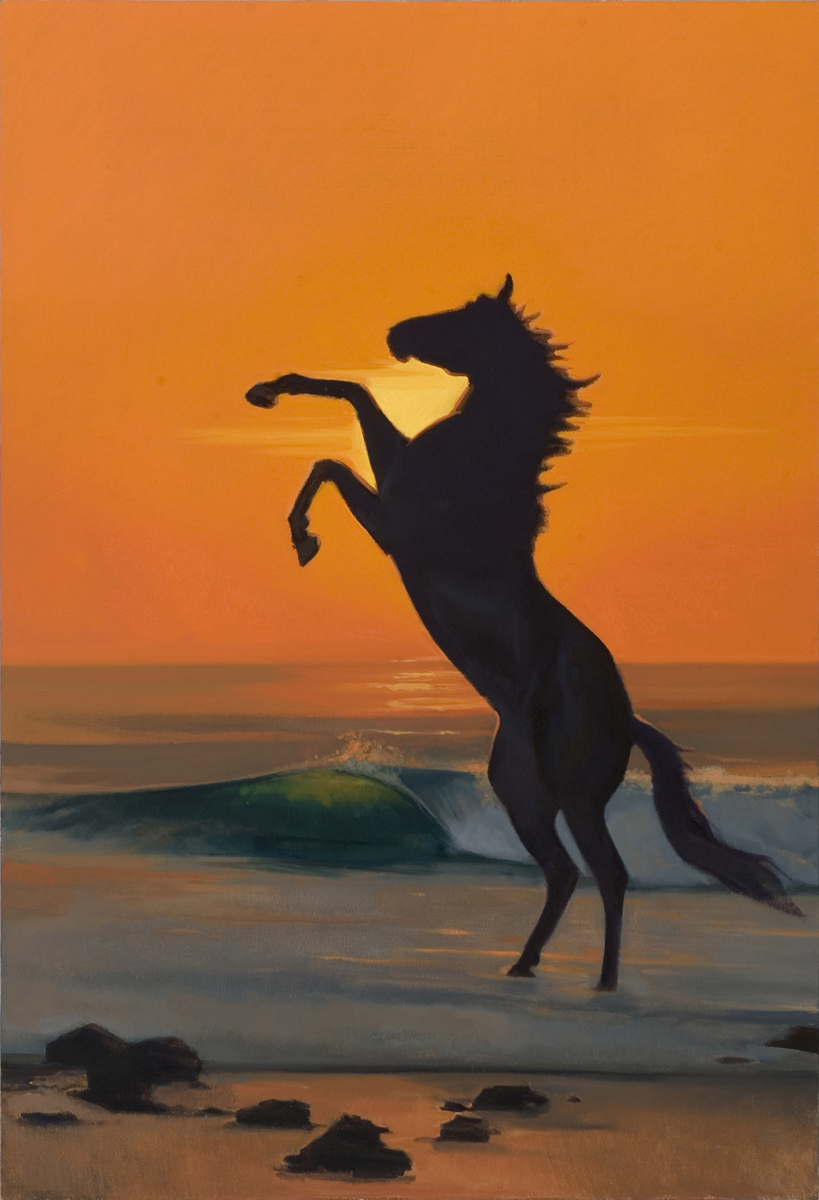
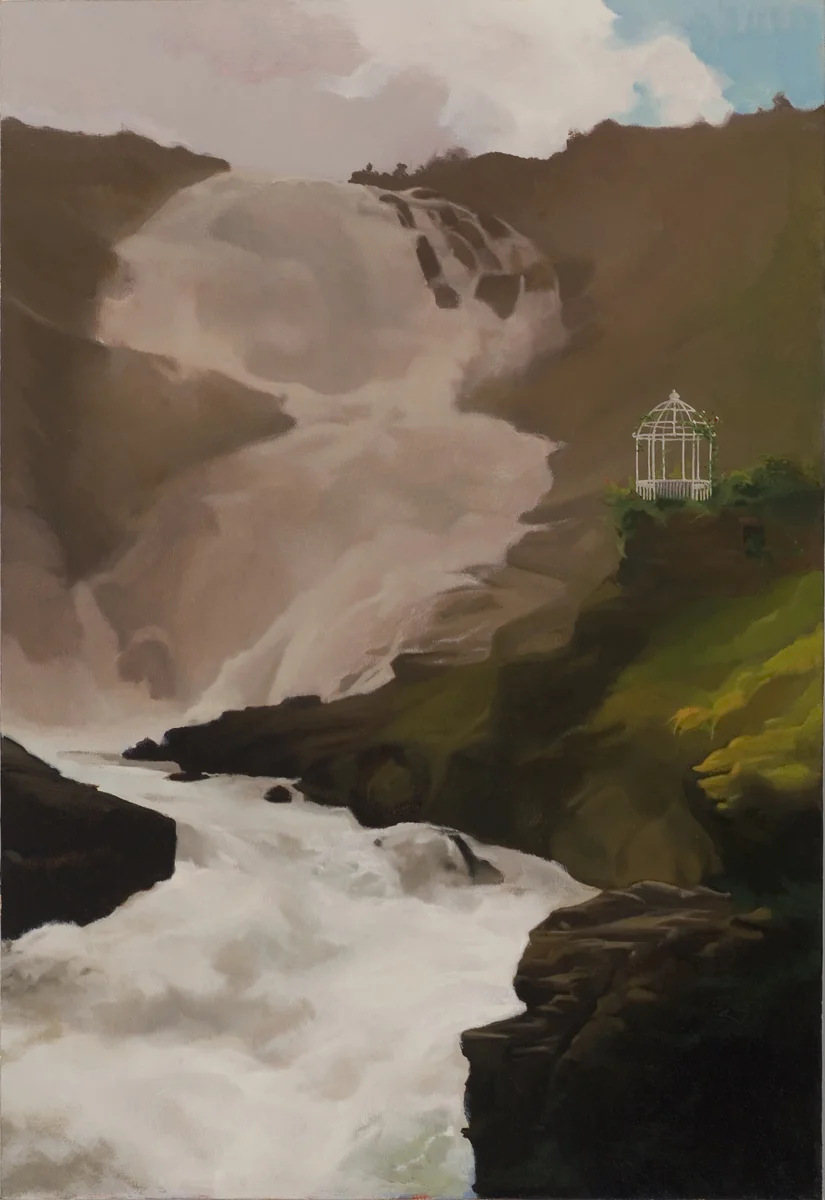
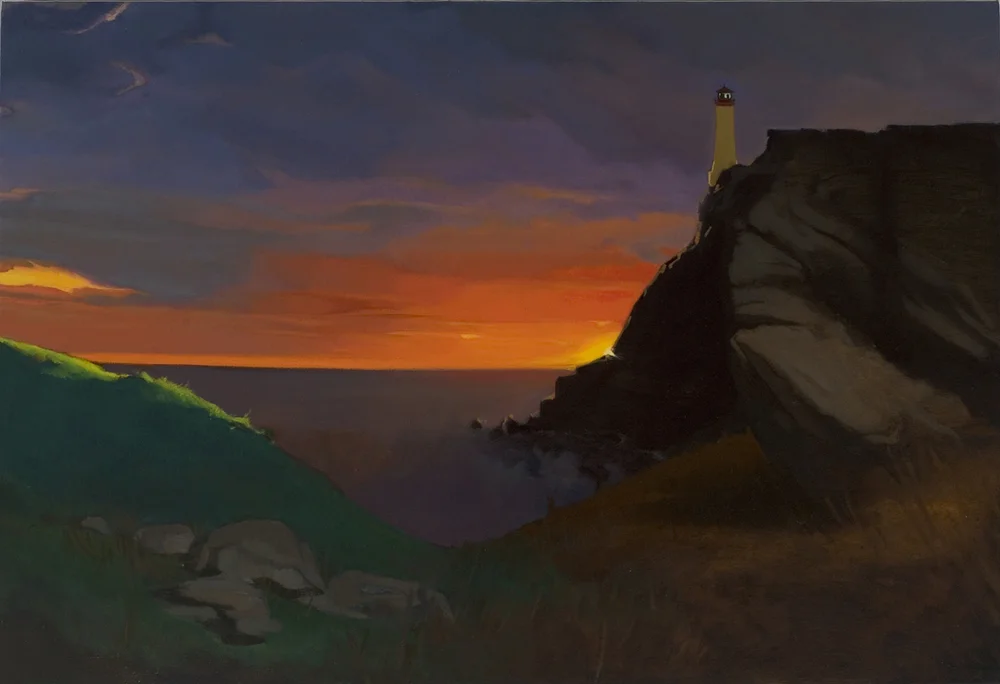
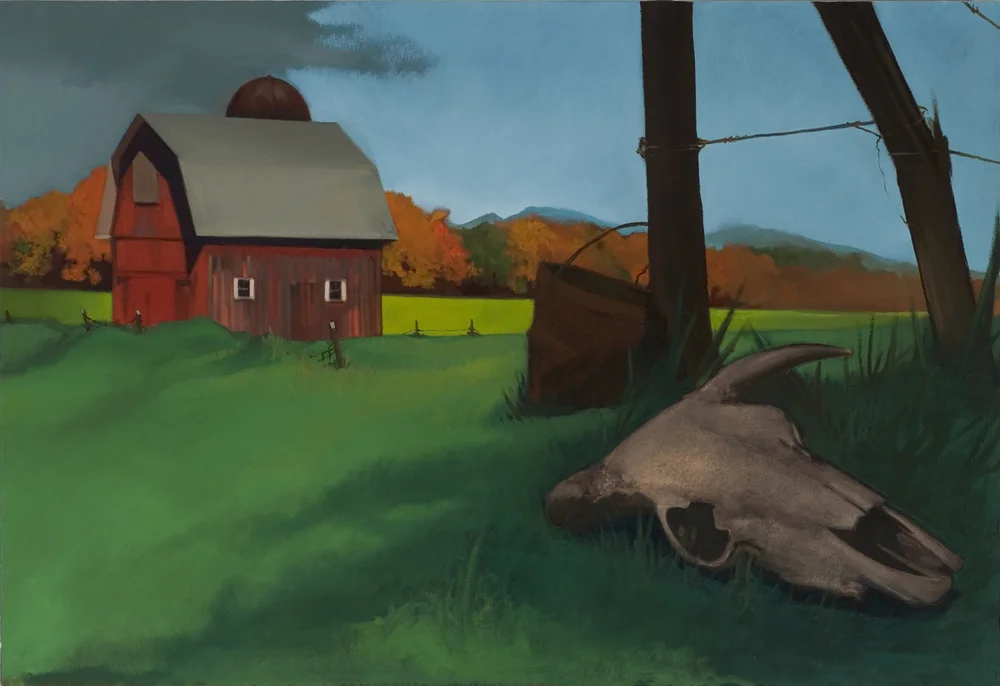
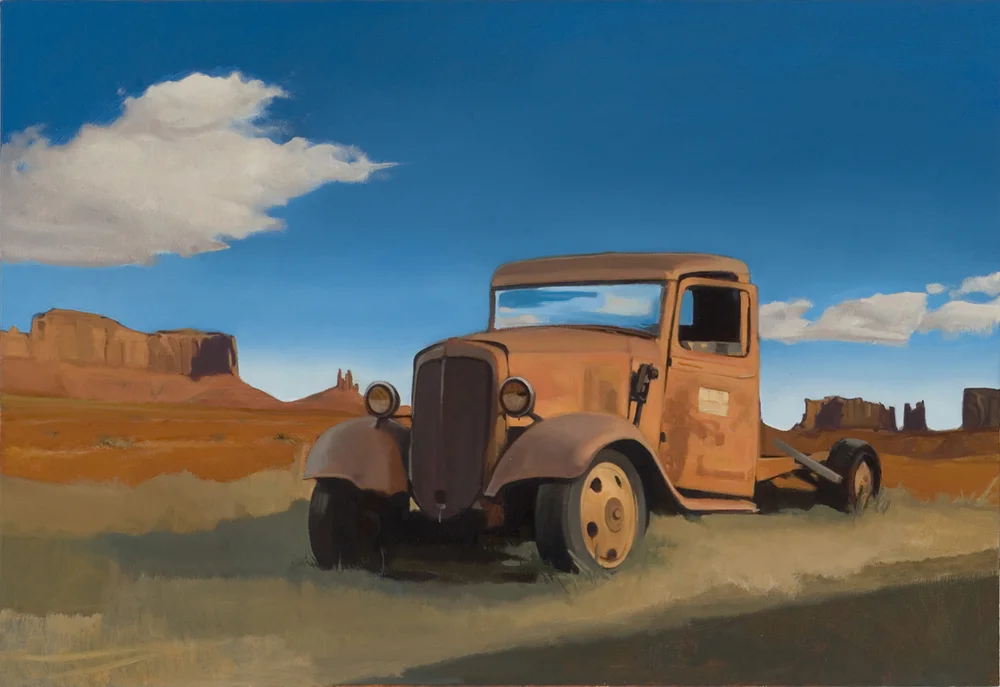
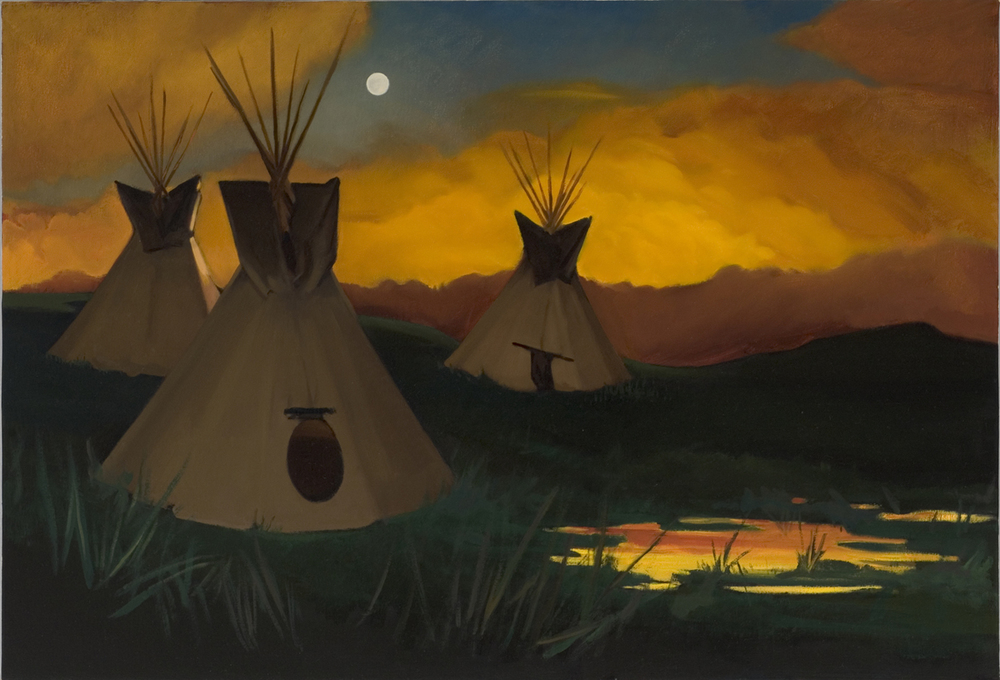
Trenton ReynoldsI actually ended up did do a series on my website I've seen, I've shown you those before, right? It's not that. So that, that is actually an assignment that ended up, I ended up doing just as a way to get out of the, of a rut. I gave it to myself. I made a list of the things that I was set out to never make paintings of. Yes, yes, yes. The gazebo one. Yeah, gazebo, waterfall, teepees. It's kind of a combination between cliche and highly emotional, but like insubstantial types of images. Yeah. So, but that's interesting that if you were to make, well, yeah.
Sabrina Ward HarrisonI kind of want to give that assignment. I think that's a great...
Trenton ReynoldsThere's so many different ways that that conversation can be taken. I feel like, you know, giving that assignment, there's so many different things to dig into there. I just really think it's a great one. Okay, what's next for you?
Sabrina Ward HarrisonThis one I loved. um This was a typography class that I just love, love, love this assignment. We were all assigned randomly a different part of San Francisco. The campus was in San Francisco. and it was a radius of I think it was like just a block like it was a small very small section but it was there was probably 18 of us in the class and so there's 18 different locations spread all through the city in the financial district and north beach and the the Italian part of town, like the Presidio way out by the water. And I was given this tiny little block. And I guess it was maybe, no, you know, remembering now, it was an actual, no, that's right, it was an actual physical place. So I was given this tiny Mexican restaurant on Mission Street, like in the heart of the mission in... San Francisco. And we were to study this place and create a typography study of lettering letters and you know how it's definition of typography. You know it's type type. Create type and create a project based on this location. So you were just study. So for me it was really, really looking at line, like really studying the line of this of this place. And so I spent a week sitting in this tiny Mexican restaurant, family-owned, and I loved the project. And we remember studying, there were these kind of decorative... bars on the windows. Kind of like that twirled and did a whole, did something with the lines of these sort of script-like, they wouldn't look like, you'd see them normally, you'd see them on restaurants all the time, but but they, so photographing and studying the lines of location, I just thought was really, really interesting. Just, again, making you just look really closely and be circumspect about the atmosphere and the environment around you. And I think I've always kept that to this day. I mean, I think about that a lot. I'm always, you know, looking at the line within I have some green tomatoes today that I determined I want them to get ripe before it gets cold. But I just put them on my window sill and the lines of the screen, the sun coming through on the screen on the window shadowing on these round tomatoes and just the curves of the lines. really beautiful.
Trenton ReynoldsHas that affected your... I don't know, I can imagine now that you have this relationship to your surroundings where you're thinking in terms of creating a typography that would be unique to that place or somehow capture that place. Is that something that you still think of, like... how, maybe even not typography, but how the character of a place could be translated into, you know, the artwork?
Sabrina Ward HarrisonI would say I'm sort of like, give me that assignment, Trent, give me that assignment, because I didn't think of, yeah, that'd be really good. I think I'm always looking at the lines of... wherever I am but to consciously really look and collect those and create something from that would be a great thing to do
Trenton ReynoldsI can imagine that you're putting together a vocabulary of textures of colors and of a given location and then making a series, you know, based on that. That'd be really interesting. But I know in the past you have talked a lot about the effect that environment has on your productivity and your art making. Do you feel like your actual color choices and your choices shape and line and is that affected by your environment or it was just kind of the feeling?
Sabrina Ward HarrisonOh, absolutely. I think so. And I think the way the shadows lengthen the winter and the way, because it's the light and the shadow, it's all... I feel funny. I can't really explain what it is right now. now with what I'm going to say about that but yes.
Sorry.
Sabrina Ward HarrisonIt just makes me think about how much I... Sorry, suddenly I just got self-conscious about trying to sound. To be honest, I'm really stuck right now. I feel... It's funny. Because I'm doing... This is not an excuse, but I am focusing more on CrossFit and the You know, there's a time and a place for everything.
For sure.
Sabrina Ward HarrisonThat's actually that Ecclesiastes line from the Bible is actually what I end up putting on when I did the typography on the blocks. There's a season and a time for everything under heaven. that long ecclesiastes which again we need to be more gentle about with ourselves because there is a season for all we are so hard on ourselves about productivity creatively and
Trenton ReynoldsYeah. Would you feel like those are mutually exclusive things? Like either you focus and, and drop into your art making or you are trying to get out and be more connected to the city and other people like can, can those two things not coexist?
Sabrina Ward HarrisonI would love, I would love them to, but I think, I think, um, I would love them to, I think because this is sort of new and, um, And even physically, I'm kind of exhausted. My body, I like my arms from... I went this morning, like my arms are kind of sore, which in a good way, which feels really good. But the idea of like picking up stuff and lodging, getting down on my knees and working on the floor, I'm like... you know it's like a little bit of that too because I think the physicality is such a big part of working for me so I've get my exercise making art before that was that was not
Trenton ReynoldsSo he came to my studio and it was just a conversation between him and I and he gave me this assignment. At the time, I was struggling to kind of get to what I really wanted to be doing there at the school, what I was trying to get from that experience, what the work was that I was meant to be making at that time. I had spent the first year doing this collaboration with a religious community on the south side of Chicago and had decided to not do that and instead focus on just being at the school and getting the most out of being there at that at that having that experience uh so I was I was just kind of having this uh hard time really getting to the root of what I even wanted to do there at school and what was it yeah what was the kind of structure like
Sabrina Ward Harrisonas far as producing work or expectations as far as that went at that point for you?
Trenton ReynoldsWell, in grad school, it's wide open, especially at contemporary schools. Like, there's no expectation as a painting student that I would ever even make paintings. Like, they're so focused on this interdisciplinary, like, do whatever you want. So as, you know, I applied to the painting program, I got in as a student, as a painting student, but there were, I would say over half of my program weren't really doing traditional painting. Like one guy was doing these sound installations with speakers and another guy like, you know, it's just like all over the place. And which I think is a good thing and a healthy way to go, but, In terms of like it having a structure. It's just there was no structure. Yeah It was anti structure. And so we had essentially 24 hour seven day a week access to our studios we had One mentor come in once a week. So we had two mentors in a semester coming in alternating weeks and that was pretty much it. They'd come in, they'd talk about whatever it is we were doing, kind of respond. It was pass-fail, so it was not like they were coming in to give us a grade.
And...
Sabrina Ward HarrisonThen why do you pay so much money for it?
Ha!
Trenton Reynoldsthat is a really good question you pay so much money for the name the legitimacy of the institution you pay so much to have access to you know supposedly some of the best teachers around and and the facilities at the school the network of galleries and the kind of pipeline that that being at that school puts you in. So I don't think it's worth paying as much money as you do, but that being said, if money weren't such a big issue, I had a fantastic experience at school, and I loved it, and it was life-changing, and it's... It was wonderful. But, you know, is it worth as much as you have to pay? It's up for debate.
Sabrina Ward HarrisonIt was just more trying to understand, like, not having that structure. It must be really self-driven where you have to go, I'm going to really reach out to this professor. I'm going to really, you know, explore the interdisciplinary, what I have access to. I'm going to really.
Trenton Reynoldsyou know show up for it it's got to be self self-driven and you're in grad school so i mean it it makes sense that they would give you that kind of reason they assume that in undergraduate you came you came to a little bit more clarity of what you actually really want to do and that you have this self-discipline and maturity to to guide yourself um and seek out help when you when you are struggling um and people were very accommodating in that regard as well like if you wanted somebody that wasn't your mentor to come in and for a studio visit, they would often be willing to. So anyway, so this is all to say that I was at kind of a rough place, kind of trying to find what I wanted to do. He gave me the assignment of taking the afternoon off and doing nothing and going and getting food that was like the food that I would get if I was treating myself, you know, for a day. So like, go get a pizza. And, you know, sit down and take your time. Don't do anything for the rest of the afternoon. Eat that pizza. And then his assignment was to make a list. He was all about the list. And I think lists are fantastic yeah but he said make a list of all the things you know the things that really draw you to art making what is it that you love and um you know my list had things like big like size uh squishy paint rich color like you know like i i think you and i probably are similar in our our kind of fascination and love for the visceral nature of like art materials and making stuff like I love the kind of hands-on aspect of art making the explanation he gave had something to do with that art making necessarily is you know a self it's about yourself right it's about connecting with something that's inside you, expressing, getting that out, and so it's self-indulgent to a certain degree, and so actually going out and just being kind of self-indulgent for the afternoon, and getting into that place of just kind of allowing yourself, giving yourself permission to to think about what it is that you love, that it's all about you. What is, what is it that you really connect with? What, what is it that drives you? What is it that you long for? What is it? What are your desires and appetites? And really try to get to the foundation of what that is. And that's going to teach you what it is that, you know, you need to create because it's got to come from that place. It can't come from external. and motivators. It can't come from what is selling right now in the art market or what is it that art critics want to see or what is everybody else doing and how can I like pull the best from that? You know, it's like it's got to come from a much deeper place. So, I thought it was a fantastic assignment and, uh, of felt like. What kind of clarity did you get? I think just that, you know, that it relieved me from the stress, like going out and actually physically taking the day off, you know, and dismissing all of what I was supposed to be doing that day from my mind. and just having it be about like, what does Trent want today? I want a pizza. I'm going to go get a pizza. And I sat down and I like, you know, just had the whole afternoon to spread out and to think about and not have, you know, my thoughts crowded, crowded out by other, other concerns. And, and like, just gave me permission to take the time to actually identify and make it real by making a list, like putting it, putting it out into the world on a piece of paper. Do you have that list still? No, no, that's long gone. But I ended up making these ginormous paintings, like 16 feet by... Wow. I can't remember. And I was using like squirt bottles filled with acrylic paint and they're out on my floor and then I stretched them on these massive, obviously really long stretchers made these huge paintings. Wow. Anyway, it was very liberating.
Hmm.
Sabrina Ward HarrisonWhat did you do with the paintings?
Trenton ReynoldsWell, they're massive. Yeah, I know. That's the thing. I love that. And it was a fantastic assignment. And I learned a lot. And I felt like, you know, if nothing else, it was just like a great vacation. from cares and concerns, but the reality of painting that large and storing it and transporting it.
Sabrina Ward HarrisonTell me about it. Yes, I know you understand this. So what ended up happening to them?
Trenton ReynoldsI ended up repurposing the paintings, like cutting them down and making smaller paintings on top of them. Yeah. I'm sure some of it got thrown away, and the stretcher bars I probably gave to somebody else because I'm not going to take a 16-foot stretcher bar across the country back to California, and I wasn't doing more 16-foot paintings.
Anyway.
Trenton ReynoldsSo, yes, and I don't even think I took a picture of it. I think I had it up for critique, and those were the days before smartphones and smartphones.
Sabrina Ward HarrisonThose are definitely the days before smartphones. That was so long ago. There weren't, maybe there were cell phones. Nah.
Trenton ReynoldsI remember some guy coming to, I had somebody come take digital images of my work, which was kind of a big deal at the time. And he brought out this camera. It was like, you know, when you see old cell phones on movies from the 80s, you know. It's like this massive brick, this camera, this DSLR. It was one of the first ones, you know, just massive, like comically large camera. Anyway.
Sabrina Ward HarrisonSpeaking of that era, I will tell you my last one. There's more, but I'll tell you my third one. Is I was an incredible, incredible photography teacher, Chris Johnson, who I really hope will be on the show, the podcast one day. He's just a deeply soulful, extraordinary human being. We had to document, it was a documentary project, and we had to document something or a place. I don't remember exactly the description. of the assignment but I decided so to document each room in the dorm I lived in um so it was 19 rooms in this one hallway of 18 19 year olds and all you know we were all artists um but young and just beginning to kind of find our way and what we were drawn to. So the stories that happened behind these doors, I mean, every room was exactly the same, but usually you, and it was, you know, the rooms are probably maybe 18 by 18 feet, I think I could smaller I'm a little bigger I don't remember but there were two of us in every room and then we had three RAs there were so it's such a whole thing with my RA like totally scandalous awesome page if you're listening. It's great. I so I went into each room and shot with a fisheye lens. The dynamic between the two people, you know, usually it seemed that you were paired with someone that was really different than you. And so how you creatively divide up the space and have your own sort of creative environment because also we were having to do our projects in these rooms like we had to build things and make stuff and share the small space and the ways people tried to divide the space the people next to us had a um small kiddie pool with like live turtles in it the the ra that was connected to my room through a bathroom she had huge iguanas that she was like washing in the sink. And it was really interesting to do and I made a book out of it. And I've always thought so that year, the year that would be, I guess it would be be 95, 96. It was 95. So I thought how interesting it would be to go find, somehow find those people, somehow maybe through the alumni or somehow, see if I could find them and go photograph them in their rooms or their homes now, 20 years later. Mm-hmm.
That'd be great.
Sabrina Ward HarrisonOr just find out kind of what happened to them, who went on to do what.
Trenton ReynoldsDo you still have all those photographs?
Sabrina Ward HarrisonYou know, I do, thinking of remembering all my stuff coming. That was the box that had all my negatives in it that my dad, it was like a pizza box, wasn't even tape closed. I'm like, "Oh, there's my entire, all my negatives." And I saw that those were in there, so I do have all the negatives.
Trenton ReynoldsThat's fantastic. That'd be awesome if you could scan those.
Sabrina Ward HarrisonYeah. I think I have a copy of it. And I have all the prints too. It was really good. It was really great.
Trenton ReynoldsWell, that is... I was just thinking, it seems like a lot of the assignments that you chose, like the psychological the like I don't know I really makes me want to be
Sabrina Ward Harrisonteaching right now there's some part two there's the making time and then there's a teaching time for sure I'm excited for whenever we have classes And that is it guys. Go make a three-dimensional autobiographical book. "Broom the Trees" is brought to you by Trent Reynolds and me Sabrina Harrison. I am recording this outro in the car on the way to a farmstead in northern Wisconsin and the sun is setting and it beautiful you can find the show notes and roominthetrees.com and leave us a review on iTunes you can do that by going to roominthetrees.com/itunes and become a patron for three bucks five bucks that's patreon.com/patreon dot com forward slash or backslash i'm not sure room and we'll talk to you next week and have a great weekend and make some stuff and explore some stuff and just enjoy a bit of fall weather it's beautiful today bye